
Solar Panel Warranties Explained: Product, Performance and Installer

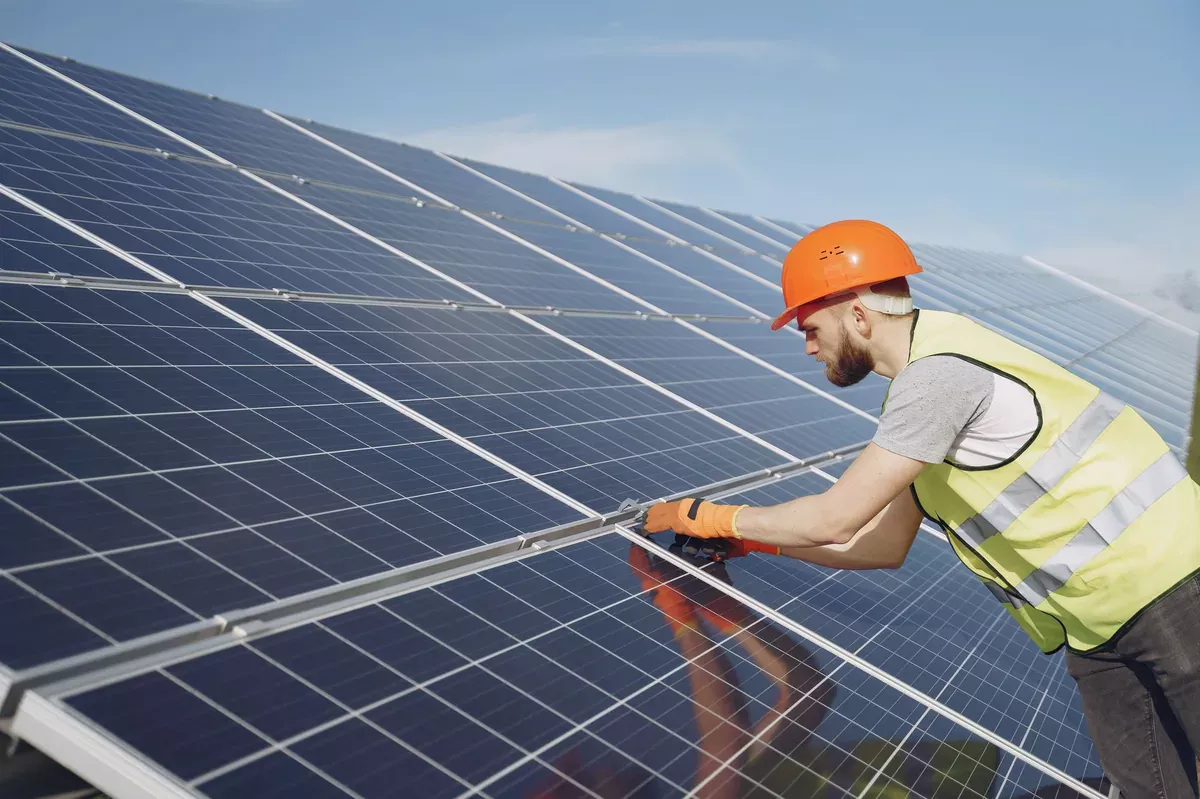
Solar technician installing panels on a Perth roof covered by installer warranty

A solar system is a 20 to 30 year purchase, yet many buyers spend more time comparing panel brands than reading the warranties behind them. A solar quote usually comes with at least three separate warranties, each covering something different and each backed by a different business. Here is how they work, what they really cover and how to protect yourself.
3separate warranties in most solar quotes: product, performance and installer
~0.5%median yearly output loss for panels in a major NREL review
~50%share of system failures caused by inverters (CSIRO)
ACLAustralian Consumer Law guarantees apply on top of any warranty
Solar technician installing panels on a Perth roof covered by installer warranty
Good workmanship is covered by a separate warranty from the panels themselves.

The three solar warranties at a glance

Think of each warranty as answering a different question. Is the hardware free of defects? Will it keep producing power at the promised level? Was it installed properly? The table below summarises the differences.

*Ranges reflect common terms on manufacturer datasheets and warranty documents. Always read the specific document for your products.
WarrantyWhat it coversWho backs itTypical length*
Product (materials and workmanship)Manufacturing defects in the panel: delamination, faulty junction boxes, frame or glass defectsPanel manufacturerCommonly 10 – 25 years
Performance (power output)Output falling below a guaranteed percentage of rated power over timePanel manufacturerCommonly 25 – 30 years
Installer (workmanship)Faults caused by the installation: roof leaks, loose wiring, poor mountingSolar retailer or installerVaries by business; get it in writing
InverterDefects and failure of the inverterInverter manufacturerCommonly 5 – 12 years, often extendable
Key idea

A 30-year panel warranty is only as good as the company behind it. A warranty from a manufacturer with no Australian presence can be very hard to claim on, no matter how long it is.

Product warranty: covering defects

The product warranty is the manufacturer’s promise that the panel is free of defects in materials and manufacturing. It is the warranty you actually lean on if a panel physically fails, for example if the backsheet cracks, the frame corrodes, water gets into the junction box or bypass diodes fail.

What it usually does not cover is just as important. Damage from storms, hail beyond the panel’s tested rating, falling branches, pests, poor installation or someone walking on the panels generally falls outside the product warranty. Those risks belong to your home insurance or the installer’s workmanship warranty.

Check the fine print for

  • Labour and freight. Some warranties replace the panel but leave you to pay for removal, transport and reinstallation, which can cost more than the panel itself.
  • Australian contact details. Look for a local office or registered representative.
  • Installation conditions. Some warranties require installation by an accredited installer to the manufacturer’s instructions, and may exclude coastal sites very close to the ocean unless the panel is salt-mist rated.
  • Transferability. Check whether the warranty passes to a new owner if you sell your home.

Performance warranty: guaranteed output over time

All panels slowly lose output as they age. The performance warranty sets a floor on that decline. A typical document guarantees a slightly lower output after the first year (to allow for initial light-induced degradation), then a small linear decline each year to a stated percentage at year 25 or 30.

For context, a widely cited review by the US National Renewable Energy Laboratory (NREL) of around 2,000 degradation measurements found a median loss of about 0.5% per year for crystalline silicon panels. Modern performance warranties are generally built around similar or lower rates.

Illustrative compounding decline from 100% rated output. Your warranty document states the exact guaranteed figures.
YearOutput at 0.5% per yearOutput at 0.8% per year
199.5%99.2%
1095.1%92.3%
2090.5%85.2%
2588.2%81.8%
3086.0%78.6%

Claiming under a performance warranty is harder than claiming for a visible defect. You usually need independent test results, measured under standard test conditions, showing the panel is below the guaranteed level. Inverter monitoring data is a useful early warning, but the manufacturer will normally ask for formal testing. That is why the performance warranty matters mostly as a signal of quality and confidence, while the product warranty does the heavy lifting in real-world claims.
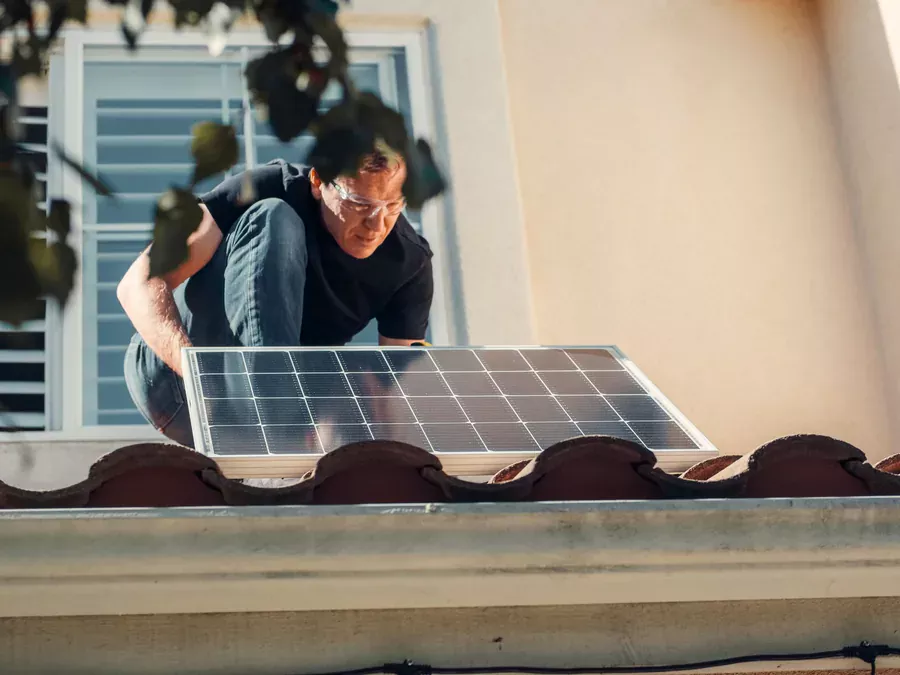
Installer fitting a solar panel to rails on a residential roof
The installer warranty covers the mounting, wiring and roof penetrations.

Installer (workmanship) warranty

The installer or workmanship warranty covers problems caused by how the system was put in. That includes roof leaks around penetrations, damaged tiles, loose rails, poorly made cable connections, water getting into isolators and conduits, and incorrect settings. Because it is offered by the business you buy from, its value depends entirely on that business still trading when you need it.

When comparing quotes, ask how long the workmanship warranty lasts, whether it covers call-out and labour, and who handles manufacturer claims on your behalf. Read the contract terms carefully. Our solar contract terms and conditions show the kind of detail you should expect in writing, and our complaint handling procedure sets out how issues are resolved.

Accreditation check

Check that your installer is accredited with Solar Accreditation Australia (SAA) and holds a current electrical contractor licence. energy.gov.au notes that accreditation belongs to the individual, so you can ask to see the installer’s digital ID on the day.

Inverter, battery and racking warranties

CSIRO notes that inverters, which contain hundreds of components, are responsible for nearly half of all solar system failures. Inverter warranties are much shorter than panel warranties, so it is normal to replace an inverter at least once over a system’s life. Many brands offer optional extensions, and some module-level products such as microinverters and optimisers carry longer warranties. Learn more on our solar inverter page.

Batteries usually carry a warranty defined by years and by energy throughput or retained capacity, whichever comes first. Mounting systems and rails have their own warranties too, which matter in coastal and high-wind areas.

ComponentWhat the warranty is usually measured inQuestions to ask
PanelsYears for defects, percentage of output for performanceIs labour included? Is there an Australian office?
InverterYears, sometimes extendableWho swaps the unit if it fails? Is there a loan unit?
BatteryYears and throughput or retained capacityWhat capacity is guaranteed at the end of the term?
Racking and railsYears, subject to installation conditionsIs it rated for coastal or high wind sites?
WorkmanshipYears, set by the installerIs call-out included? What if the business closes?

Your rights under Australian Consumer Law

Manufacturer and installer warranties sit on top of your rights under the Australian Consumer Law (ACL). The ACCC explains that products and services come with automatic consumer guarantees, including that goods are of acceptable quality and that services are provided with due care and skill. These guarantees cannot be excluded by a contract and can apply even after a written warranty has expired, depending on what a reasonable consumer would expect from a product of that type and price.

Watch out

Be wary of very long warranties on unknown brands or quotes that bundle a “lifetime” warranty with high-pressure sales tactics. The real test is whether the company will still be around and willing to honour it.

How to make a warranty claim

  1. Keep your paperwork. Store the contract, invoice, panel and inverter serial numbers, warranty documents and the installer’s compliance certificate in one place.
  2. Record the problem. Take photos, note inverter error codes and export monitoring data.
  3. Contact your installer first. They are usually best placed to diagnose the fault and lodge the manufacturer claim.
  4. Escalate in writing if the installer cannot help, contacting the manufacturer’s Australian office directly.
  5. Get help if needed. Consumer Protection WA can assist with unresolved disputes.

Choosing the right company up front saves most of this effort. See what to look for in our guide to the best solar panel company in Perth.
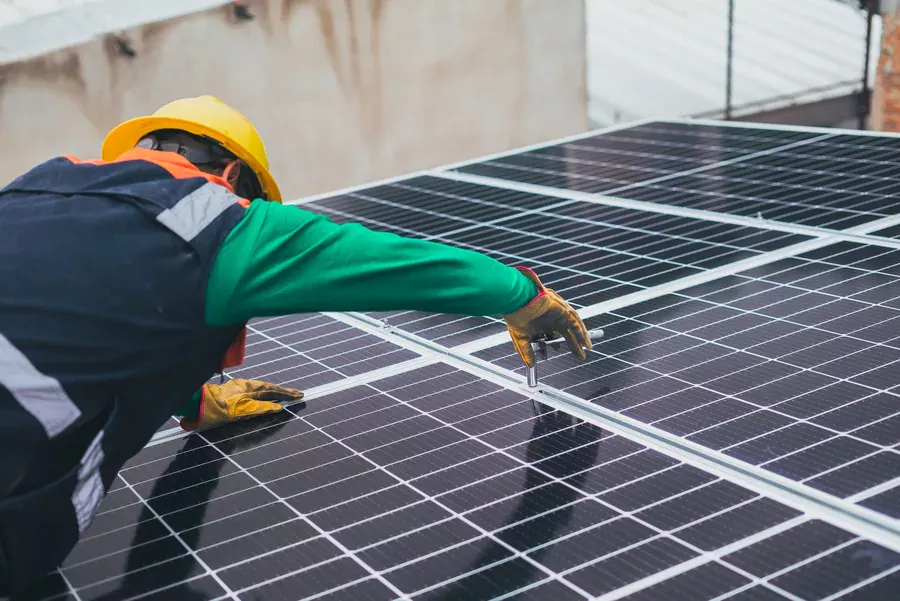
Solar installation team working on panels covered by product and performance warranties
Warranties protect you only if you keep records and the companies behind them stay in business.

Frequently asked questions

What is the difference between a product and a performance warranty?

The product warranty covers defects in the panel itself. The performance warranty guarantees the panel will still produce a minimum percentage of its rated power after a set number of years.

Does a solar warranty cover hail or storm damage?

Usually not. Weather damage is normally a home insurance matter. Tell your insurer when you install solar so the system is listed on your policy.

Do warranties transfer when I sell my house?

Many manufacturer warranties do, but terms vary. Check the warranty documents and keep them with your property records for the buyer.

How long should an inverter last?

Inverter warranties are much shorter than panel warranties, so most owners should budget for at least one inverter replacement over a system’s life.

What if my installer goes out of business?

You can still claim directly with the panel and inverter manufacturers, which is why a local manufacturer presence is valuable. Your ACL rights may also apply.

Want a system backed by warranties that mean something?

Future Solar WA uses quality, well-supported brands and explains every warranty in plain English before you sign.

Get a free solar quote
Sources
  1. CSIRO – Solar photovoltaics: optimising performance – https://research.csiro.au/infratech/wp-content/uploads/sites/38/2024/12/4393_SolarPhotovoltaicsoptimisingperformance_WCAG.pdf
  2. Jordan, D. and Kurtz, S. (NREL) – Photovoltaic Degradation Rates: An Analytical Review, Progress in Photovoltaics (2013) – https://doi.org/10.1002/pip.1182
  3. ACCC – Consumer guarantees – https://www.accc.gov.au/consumers/buying-products-and-services/consumer-rights-and-guarantees
  4. energy.gov.au – Installation day and after – https://www.energy.gov.au/solar/solar-retailers-and-installation/installation-day-and-after
  5. Consumer Protection WA – https://www.commerce.wa.gov.au/consumer-protection

Solar Benefits for Commercial and Residential Real Estate Owners

Solar energy is no longer just an alternative source, it has become a dominant and preferred choice due to its profitability and numerous advantages. It offers significant benefits for both commercial and residential properties, making it a leading solution in today’s energy landscape.  

Nowadays, it is turning out to be a boon for commercial and residential real estate industry and is more or less getting a must for larger as well as smaller real estate developers. Almost every commercial as well as the residential developer is going green by going for solar panels in Perth and the other regions. The renowned names in CRE are opting for solar and promoting it extensively because of the advantages associated with it, along with caring for the environment.  

Amidst the misunderstanding associated with converting into solar, going solar is now a popular trend due to less emission of carbon along with augmenting the financial profitability to CRE. 

Have a look at the Solar Benefits for Commercial and Residential hereunder – 

  • The solar energy extends the possibility for commercial real estate owners to cut down the operating expenses and augment revenue by minimizing or completely reducing the utility expenditures. 
  • Solar panel installation would prove to tenants that they are making an investment in the property that has a lucrative future; along with assuring the credibility of real estate owners as only a few cares for the environment these days. . 
  • Solar panels help gain instant recognition by future tenants, if not by the general public. 
  • More companies, municipalities, and both profit and non-profit organizations are seeking energy-efficient, self-sufficient properties that use clean and safe energy. Such properties not only increase building value and reduce operating costs but also attract new tenants and retain current ones.

It is well evident from the above benefits that for residential and commercial real estate owners, solar panels are an incredible investment prospect. By hiring the services of the best solar panel installer in Perth, the real estate owners can gain acknowledgment among the tenants in Perth along with increasing the value of their estate property. Reasonable solar panel cost in Perth is an aid to maximize profitability and is what every Solar Benefits for Commercial and Residential real estate owner doesn’t miss to do.

To know mores your options contact us today or simply leave your contact details here. One of our friendly sales expert will be in touch with you.

Best Solar Panels Cleaners in Perth

Solar Panel Cleaning and Maintenance: While solar panels are designed for low maintenance, regular cleaning is essential to preserve peak performance. Dust, debris, and weather residue can significantly impact energy output over time. For the best results and to protect your investment, we recommend using professional solar panel cleaning services in Perth who have the expertise and safety equipment to maintain your system properly.

Dirty Solar Panels Cleaners in Perth can lose up to 30% of their efficiency along with it costs about hundreds of dollars every year. Without regular cleaning and maintenance, you will not be receiving full financial benefits of solar panels Systems in Perth. To keep these solar panels in prime condition so that there are working to its full potential, it is imperative that solar panel are cleaned and maintained regularly.

Keeping Solar Panels Clean:

Over time, solar panels become dirty and less effective from natural elements such as dust, traffic, trees, debris. Pollution, fires, and wildlife such as birds. As proper cleaning not only extends the life of your solar Panels but it also ensures that getting the absolute best energy conversion possible from your system.

At Future Solar WA, we believe that customer satisfaction is key. Our approach to customer service focuses on delivering exceptional support both before and after the sale. We offer world-leading solar brands at competitive prices, along with high-quality components and experienced, professional installation teams. Whether for residential or commercial needs, Future Solar WA provides comprehensive solar solutions across Western Australia and offers top-notch solar panel cleaning services in Perth.

Our team of insured and trained professionals will keep your panels operating at maximum solar efficiency. Our equipment is non-abrasive and environment-friendly, which ensures a stain-free finish for maximum sunlight absorption for solar panel cleaning in Perth.

Get solar Health Check with Future Solar WA in Perth WA:

We offer the best and highly recommended solar panel maintenance and health check as an annual service to ensure your system is running efficiently with an optimal capacity at all times.

Our solar health check is carried out by an accredited electrician and includes the following:

  • Detailed inspection of your solar panels system
  • Cleaning of solar panels
  • Removal of debris surrounding the solar panel array and cabling
  • Power output check.
  • Cabel check
  • Mounting check
  • Test switches
  • Signage check
  • Re-application of sealer, if necessary.

In AS/NSS 5033 regulations suggest that with regular cleaning and maintenance program your solar panels not only increases your energy output but they also required to protect your manufacturer’s warranty’s provided by your installation company.

Other Services Provided by Future Solar WA:

When is the best time to install a solar panel system in Perth?

Buying items during peak season can be costly and come with hassles such as delays, stock shortages, and increased workload. That is why many people now choose to purchase solar panel systems during the off-season to avoid the last minute rush and take advantage of a more streamlined process in Perth.

Solar panels these days are a rage and if you too are looking to opt for a solar panel for your residential or commercial property, then avoid ordering for it in summers. If hot and humid is not the right time to go for solar panels, then you must be wondering when the right time to install a solar panel in Perth is. 

Read on below to know the answer to the above question:

 Autumn

Autumn presents ideal conditions for solar installation in Perth. The season delivers consistent sunshine with little rainfall, while moderate temperatures create comfortable working conditions that allow for efficient, quality installations. Getting your system up and running in autumn means you will have it operational through winter and fully optimized by the time summer’s peak energy demands arrive. This timing can accelerate your savings, though your actual returns will ultimately depend on how and when you use electricity throughout the day.

 Fruitful in winters 

Installing in autumn would be making preparation to beat the high electricity bills of winters that usually arise due to the increased usage of heaters in winter. As Australian winters have reasonably good numbers of sunny and clear days, your solar system can be really handy in reducing electricity bills. 

 Reduced cost of installation during autumn 

Even for saving, autumn is considered to be the best season for installation. The solar panels system price in Perth in the autumn season is comparatively lower than spring and summers due to the lesser demand or rush for it. It has generally been noticed that the cost of installation of solar panels in summers is almost double the price at which solar panels are installed in autumn. To be able to save some pennies, then the solar panel system in Perth should be installed in the autumn.

Defy the rush of summers and spring 

Spring and summers are busiest seasons for solar panel system in Perth and you may have to wait for more than a month during the seasons when solar panels are in demand mostly. By installing solar panels in autumn, you can simply relax and enjoy reduced electricity bills when your neighbors and locals would be struggling hard to buy and install the solar panels in summer and spring. You can get ready to beat the heat of summers and spring and relax in your building. 

Autumn is usually not as hot as summers or spring in Perth is and the reduced temperature of autumn is a boon for solar PV system generation. In addition to it, it is recommended to install before the end of the year to secure the STC incentive and save a handsome amount.


4 Myths about Solar That Could Be Costing You Money

Have you lined up yourself in the rage for solar panels Perth? Not yet, as you believe that it is just a luxury of riches and they are not as productive as the solar panel companies promise them to be.  

There are lots of myths about Solar Panels Perth output, cost, functioning, etc. which is the reason why people in need of them are avoiding solar panels in Perth and unknowingly getting harsh on themselves. Do not get judgmental until you have the proof in your hands, and in this blog, we bring you some justifications to the widespread myths. 

Myth #1: Too expensive to afford solar panels 

Solar panel installation often carries a price tag similar to purchasing a vehicle, which can feel daunting for many households. However, the actual out of pocket cost is typically much lower than you might expect. Government rebates and incentives significantly reduce the upfront investment, making solar more accessible and freeing up your budget for other financial priorities. Understanding these available rebates is key to accurately assessing what you’ll actually pay for your system.

To give you an idea, a small-sized solar panels cost in Perth is approximately starts from $2500. But you can also buy a well maintained solar system without a battery to have a reduction in your readings on your electricity bill.

 Myth #2: Solar Panels do not work during winters and rainy days, therefore would be ineffective in lowering the amount in electricity bill 

 It is believed that solar panel in Perth gives no output during cloudy days, at night and snowfall. Do you know that it needs sunlight and not harsh sun rays of summers? They are functional in all seasons. Also, you too may not be aware that the amount of solar power spawned in daylight hours alone is enough to reduce your bill.  

Throughout the day, individuals use the energy generated by their solar panels, while the green energy system remains inactive at night. Any excess solar energy produced during the day is fed into the grid, and the system owner receives a feed-in tariff, helping to save a significant amount on energy costs.

Myth #3: Tough maintenance of solar panels 

Servicing and cleaning are vital for not only solar panels but for every device at home for long continuance. You should get your solar panels regularly serviced and cleaned, and trust us that it would not cost bundles of money.

According to the solar panel installers in Perth, solar panels require just a hose-down every year and inspection after every 5 years or so. The life of solar panels is usually 25 years and things would be highly different in your life, who knows you could be a billionaire!

Myth #4: Adverse effects of solar panels on the roof in Perth WA

 There is a serious myth amongst people that the installation of solar panels on the roof would result in heavy damage. It is not true! On the contrary, solar panel installation aids in safeguarding your roof from likely damages. The roof is shielded by elements while installing solar panels and you could get to avoid repairing your roof afterward. 

Tips to abolish the myths and extract the best solar power experience 

1. Go for a solar power set-up that accomplishes your needs
  •   Try to have access to energy consumption
  •   Interrogate the type and size of panels apt for you 
  •  Go for installing a battery storage system if you are planning to opt for off-grid
2. Opt for low-interest rate loan for it instead of paying in cash

Compare and apply for a loan for their installation to hoard on your energy bill. One can also select from green personal loans from the market to finance.  

3. Get an energy plan with a good feed-in tariff

To confirm your provider is providing you a great return on the energy, evaluate feed-in tariffs to help yourself by knowing the efficiency of the system installed. 

To encourage energy efficiency all over Perth, Government has extended assistance to end-users in the form of solar rebates and feed-in tariffs assuring growth in the renewable energy industry for Price for Solar Panel System in Perth. 

(To know more read: solar https://assets.cleanenergycouncil.org.au/documents/consumers/solar-guide-for-consumers.pdf)

Price for Solar Panel System in Perth

Are you thinking about purchasing a solar system? It is important to stay informed, as lacking knowledge about reputable solar panel providers can lead to overpaying. With many options available, how can you be sure you are getting a fair deal and the right value for your investment in Perth? That you are not a victim of the over hyped prices of solar panels?

To make sure that you buy the right piece at right prices, sometimes you may in a search of the low cost panel and end up buying inferior quality solar panels. So, it is vital to confirm that you are getting the product that is good quality and has the manufacturer warranties in place.

The financial returns any solar system is important to consider. Some of the factors that affect the financial returns any solar system this are:

Availability of Feed-in tariff

Quality of inverter and panels being installed

Consumption ratio of the energy produced by the solar. This can be as high as 70% or as low as 30%. It does depend on your usage.

Geographical location of the system and the expected daily and annual solar irradiation and cloud cover

(data source: https://www.solarchoice.net.au/blog/5kw-solar-system-price-output-return/)

Before you go on to buy it, have a look at the information that you need to be aware of:

If you want to buy a photovoltaic system for your home or business, you have to pay attention to a few things. Here is a list of buyers to get you started.

  1. Researching: Ready to go solar? Excellent decision! Before moving forward, take time to prepare properly. Review your electricity bills to understand your consumption patterns, calculate the right system capacity for your household, compare solar panel brands, research reputable installers, and estimate your payback timeline. This upfront research will help you avoid common pitfalls and ensure your solar investment delivers the savings and performance you expect.
  2. Solar Retailer: There are many companies in the market and we know it can get very confusing and daunting to find out the information. Some important points that your solar retailer should tell you are.
  • Based on your current usage, your requirement of a solar system ( in kilowatts)
  • Government incentives and how they work
  • Information about the inverters, panels and other components that make up the solar pv system.
  • Warranties
  • Feed-in tariff and how they work
  • Retailer information

3. Post Installation: your retailer will provide you with all the post installation details of your system. This will include all the information about the products, warranties, and post installation service and maintenance of your system.

(To know more read: solar https://assets.cleanenergycouncil.org.au/documents/consumers/solar-guide-for-consumers.pdf)

Prices of solar PV System Installation

ESTIMATED GRID CONNECT SYSTEM PRICE
SYSTEM SIZEESTIMATED PRICE RANGE
2 kW$2500 to $5500
3 kW$3000 to $7000
4 kW$3500 to $8000
5 kW$3500 to $9500
10 kW$9000 to $14,000

( data source: https://assets.cleanenergycouncil.org.au/documents/consumers/solar-guide-for-consumers.pdf )

To encourage energy efficiency all over Perth, Government has extended assistance to end users in the form of solar rebates and feed-in tariffs assuring growth in the renewable energy industry for Price for Solar Panel System in Perth.

To know mores your options contact us today or simply leave your contact details here. One of our friendly sales expert will be in touch with you.

Switch to Solar for $3,199: Perth’s Best Value 6.6kW Solar Panel Systems, Take control of your energy bills in 2026. (terms and conditions apply)

Close Welcome Bar