
Solar panels have no moving parts, which is a big reason they last so long. But “how long” is not a single number. Panels slowly lose output, inverters wear out sooner, and eventually every panel has to be retired and, ideally, recycled. This guide explains what the research says about lifespan and degradation, what speeds up wear in Perth conditions, and what happens at end of life.
How long do solar panels last?
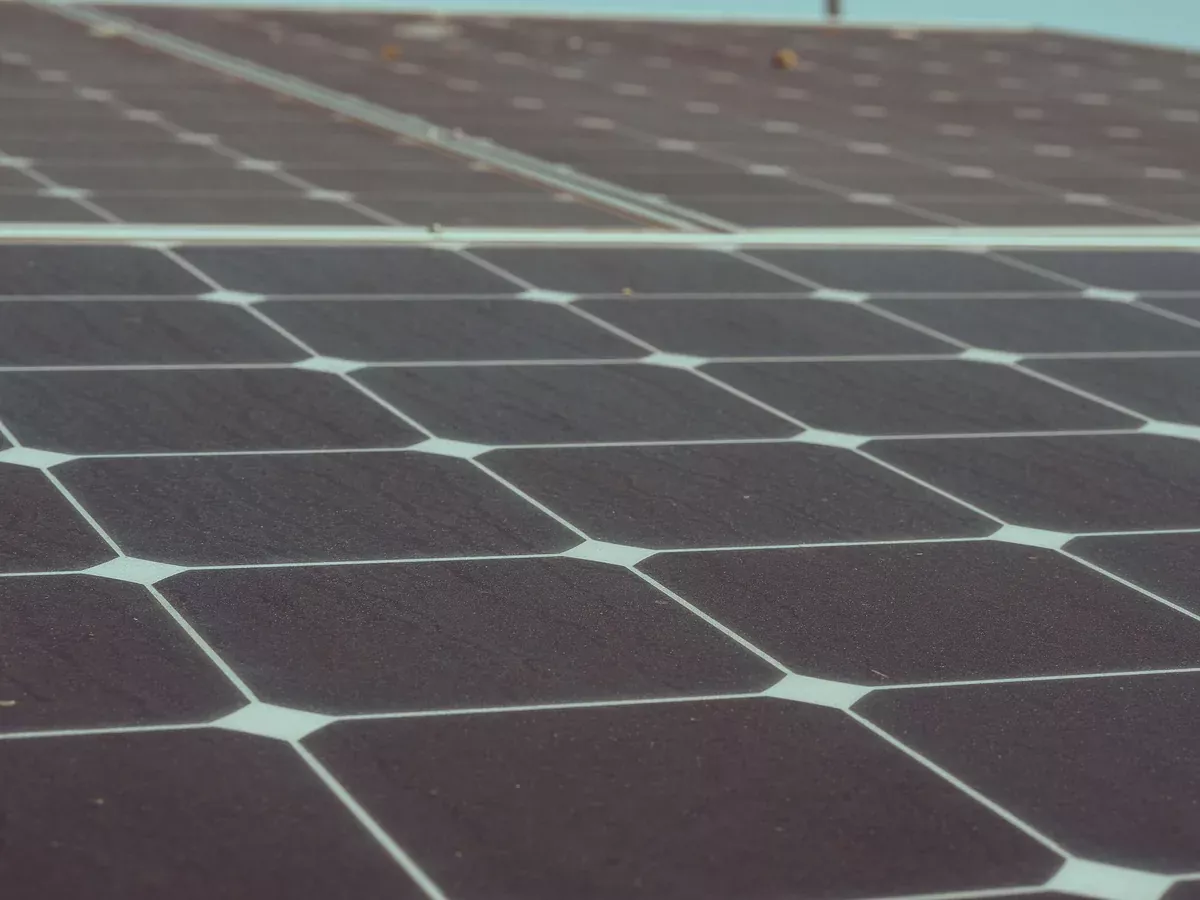
Quality crystalline silicon panels are built to keep producing useful power for decades. Their performance warranties, which commonly run 25 to 30 years, are a good guide to the minimum expected service life. Many panels keep working beyond that point, just at a lower output than when new.
It helps to separate three ideas: warranty life (what the manufacturer guarantees), useful life (how long the panel produces enough power to be worth keeping) and economic life (when replacing it with newer, more efficient panels makes more financial sense). A panel can be well within its useful life and still be worth upgrading if your roof space is limited.
A panel does not usually “die” at year 25. It keeps producing, but at a lower level. What usually forces change earlier is an inverter failure, roof work, storm damage or a decision to upgrade.
When does upgrading make sense?
Owners of older, smaller systems often upgrade not because the panels have failed but because their household needs have grown, for example after adding air conditioning, a pool or an electric vehicle. Modern panels produce more power from the same roof area, so replacing a small early system can lift output significantly. Before deciding, compare the cost of an upgrade with the remaining value of the old system and any changes to your buyback arrangements, since upgrading can affect which export scheme you are on.
Understanding solar panel degradation
Degradation is the gradual loss of output as a panel ages. The most widely cited study, an NREL review of around 2,000 measured degradation rates published by Jordan and Kurtz, found a median rate of about 0.5% per year for crystalline silicon panels, with the mean a little higher because some systems in harsh climates degraded faster.
There is also a one-off drop in the first months of operation, known as light-induced degradation, which is why performance warranties often allow a slightly larger loss in year one than in later years.
| Years in service | At 0.5% per year | At 0.8% per year | What a 6.6 kW array behaves like at 0.5% |
|---|---|---|---|
| 0 | 100% | 100% | 6.6 kW |
| 10 | 95.1% | 92.3% | about 6.3 kW |
| 20 | 90.5% | 85.2% | about 6.0 kW |
| 25 | 88.2% | 81.8% | about 5.8 kW |
| 30 | 86.0% | 78.6% | about 5.7 kW |
Common degradation mechanisms
- Micro-cracks in the thin silicon cells, often caused during transport, installation or by people stepping on panels. CSIRO notes these cannot be seen with the naked eye.
- Thermal cycling as panels heat up by day and cool at night, stressing solder joints.
- UV exposure that slowly yellows or weakens encapsulants and backsheets.
- Moisture ingress through damaged seals, which can corrode cell connections.
- Potential induced degradation (PID), a voltage-related effect that better-quality panels are designed to resist.
What wears panels faster in Perth
Perth’s climate is excellent for generating solar power, but it is also tough on equipment. Long, hot summers, strong UV and coastal salt all play a part.
| Factor | Effect | What helps |
|---|---|---|
| Heat | Silicon panels lose about 0.4% of output per °C of cell temperature (CSIRO), and long-term heat stress speeds up ageing | Leave an air gap under panels, avoid blocking airflow, and choose panels with a lower temperature coefficient |
| Strong UV | Gradual wear on encapsulants and backsheets | Quality panels with proven materials and long warranties |
| Coastal salt | Corrosion of frames, rails and connectors | Salt-mist rated panels and corrosion-resistant mounting near the ocean |
| Dust and bird droppings | Shading of cells, which can create hot spots and reduce output | Periodic inspection and cleaning when needed |
| Storms and hail | Physical damage and cracking | Correct installation to wind ratings and home insurance cover |
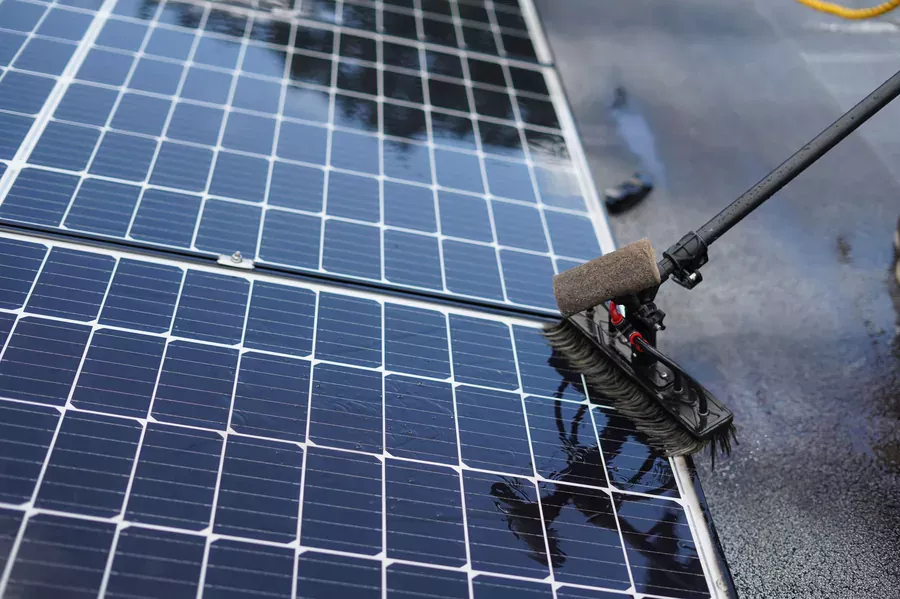
CSIRO also points out that rain is reasonably effective at cleaning panels tilted above about 5°, but less so for bird and bat droppings. Large droppings left on a panel can, in principle, shorten its life by causing localised overheating. If your monitoring shows a dip, a professional solar panel cleaning service in Perth is a simple first step.
Lifespan of the rest of the system
The panels are usually the longest-lived part of a solar system. The other components tend to need attention sooner.
| Component | What usually limits its life | Planning tip |
|---|---|---|
| Panels | Gradual degradation, physical damage | Expect decades of service; monitor output yearly |
| String inverter | Electronic component wear, heat | Budget for at least one replacement over the system’s life |
| Microinverters and optimisers | Electronics on the roof exposed to heat | Often carry longer warranties; check claim terms |
| Battery | Charge cycles and calendar ageing | Check the guaranteed retained capacity at end of warranty |
| Racking, cabling and isolators | Corrosion, UV damage to cable and seals | Include in periodic safety inspections |
CSIRO notes that inverters cause nearly half of all solar system failures. Batteries also lose usable capacity over time, as we explain in our article on solar battery performance reduction.
How to extend your solar system’s life
- Start with quality. Well-known panel and inverter brands with local support are more likely to last, and to honour warranties if they do not.
- Insist on good installation. Careful handling avoids micro-cracks, and correct cable management prevents water and UV damage.
- Watch your monitoring. Compare output with the same month last year. A sudden drop usually means a fault, shading or soiling rather than normal ageing.
- Keep panels clean when dust or droppings build up, using safe methods and no harsh chemicals or high-pressure jets.
- Schedule periodic inspections of isolators, cabling and mounting, especially near the coast.
- Keep trees trimmed so new growth does not shade the array.
Panels do not need constant cleaning or expensive servicing to last. Over-cleaning with the wrong tools can scratch glass and void warranties. See more in 4 myths about solar that could be costing you money.
End of life: what happens to old solar panels?
Solar panel waste is a growing issue worldwide. The 2016 IRENA and IEA-PVPS report on end-of-life management projected cumulative global panel waste of around 60 to 78 million tonnes by 2050. The good news is that panels are mostly recoverable materials. In that report, a typical crystalline silicon panel was about 76% glass by weight, with the rest made up mainly of the aluminium frame, polymers, silicon and small amounts of copper and silver.
Recycling options in Australia
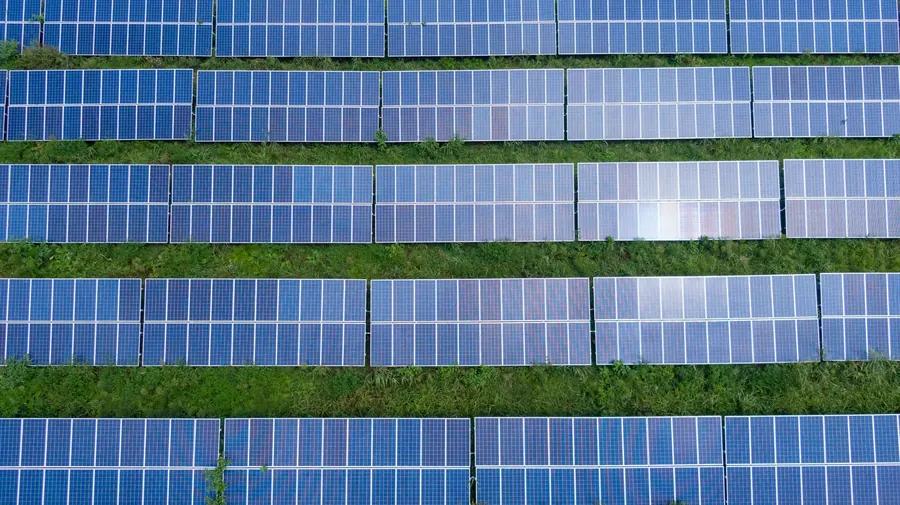
Australia has a growing number of specialist recyclers that separate glass, aluminium, copper and silicon. Some states treat panels as e-waste: Victoria, for example, has banned e-waste including solar panels from landfill since July 2019. Rules and services differ across the country, so check with your local council or ask your installer how old panels will be handled if you upgrade.
Old panels that still work can sometimes be reused on a shed, caravan or off-grid project, which keeps them out of the waste stream for longer. Ask your installer to test them before removal.
A well-maintained system also adds appeal when you sell, as covered in our article on how solar panels affect home value.
Frequently asked questions
How long do solar panels last in Perth?
Quality panels typically carry 25 to 30 year performance warranties and often keep producing beyond that, at gradually lower output.
How much output do panels lose each year?
An NREL review found a median of about 0.5% per year for crystalline silicon panels. Your panel’s datasheet lists its guaranteed rate.
Is my system degrading or just dirty?
Normal degradation is slow and steady. A sudden drop is more likely soiling, shading or a fault. Compare with the same month last year and check the inverter for errors.
Will my inverter last as long as my panels?
Usually not. Inverters have shorter warranties and are the most common cause of system faults, so most owners should expect to replace one.
Can solar panels be recycled?
Yes. Most of a panel’s weight is glass and aluminium, which can be recovered. Specialist recyclers operate in Australia, and rules vary by state.
Is your solar system still performing?
Future Solar WA can check your system’s output, inspect for wear and recommend repairs, cleaning or an upgrade.
Get a free solar quote- Jordan, D. and Kurtz, S. (NREL) – Photovoltaic Degradation Rates: An Analytical Review, Progress in Photovoltaics (2013) – https://doi.org/10.1002/pip.1182
- CSIRO – Solar photovoltaics: optimising performance – https://research.csiro.au/infratech/wp-content/uploads/sites/38/2024/12/4393_SolarPhotovoltaicsoptimisingperformance_WCAG.pdf
- IRENA and IEA-PVPS – End-of-Life Management: Solar Photovoltaic Panels (2016) – https://iea-pvps.org/wp-content/uploads/2020/01/IRENA_IEAPVPS_End-of-Life_Solar_PV_Panels_2016.pdf
- Solar Victoria – How to manage end-of-life solar PV – https://www.solar.vic.gov.au/manage-end-life-solar-pv