
Your first Synergy bill after installing solar can look confusing. There are new lines, new credits and sometimes a number that seems far too small or far too large. This guide walks through each part of the bill, explains how export credits are worked out, and shows you how to tell whether your system is really pulling its weight.

What changes on your bill after going solar
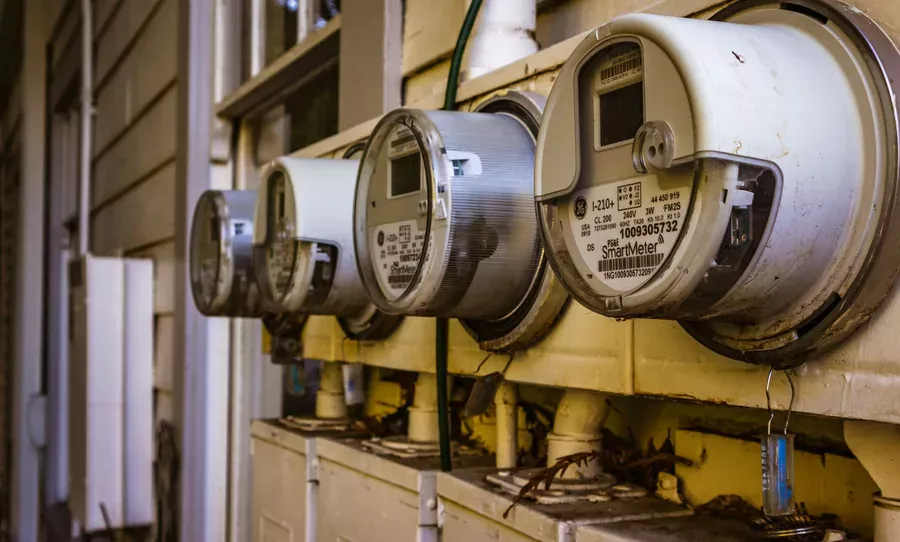
Before solar, your bill had one main job: to show how many kilowatt-hours (kWh, also called units) you bought from the grid and what you paid for them, plus a daily supply charge. After solar, the bill also has to record the electricity your panels send back to the grid. That is why a solar bill has two meter readings instead of one: import (electricity you bought) and export (electricity you sold).
What the bill does not show is the solar power you used yourself as it was generated. That self-consumed energy never passes through the meter as an import, so it simply shows up as a smaller usage figure. This is the most common source of confusion: many owners look for a “solar savings” line and cannot find one, because most of the saving is hidden inside lower usage.
Your real solar benefit = the grid electricity you no longer buy (self-consumption) + the export credit on the bill. The credit is usually the smaller of the two, because buyback rates are well below the price of grid power.
If you would like a refresher on the general layout of a household bill before diving into the solar parts, our guide on how to understand your electricity bill covers the basics.
Line by line: the key items on a solar Synergy bill
Layouts change from time to time, but the core items on a residential Synergy bill with solar stay much the same. Here is what each one means and what to look for.
| Bill item | What it means | What to check |
|---|---|---|
| Billing period and days | The dates covered and the number of days in the period | Compare like with like. A longer period or a winter period will naturally show more usage. |
| Supply charge | A fixed daily charge for being connected to the network | It does not change with solar. Even a large export credit cannot remove it unless the credit exceeds your usage charges. |
| Electricity used (import) | kWh bought from the grid, charged at your tariff rate (for most homes the A1 Home Plan) | This should drop noticeably after solar. If it barely moves, check your system output. |
| Electricity exported | kWh your system sent to the grid, shown as a credit | Look for split peak and off-peak export lines if you are on DEBS. |
| Buyback rate | The cents per kWh you are paid for exports | Confirm it matches the scheme you signed up for (REBS or DEBS). |
| Meter readings | Actual (A) or estimated (E) readings for import and export | Estimated readings can distort a single bill. They are corrected later. |
| Average daily use and cost | Your average kWh and dollars per day | The best number for tracking progress from one bill to the next. |
Why the meter matters
To record imports and exports separately, your home needs a bidirectional or advanced meter. When you connect a new system, the network operator, Western Power, upgrades or reconfigures the meter. Synergy explains that, until this is done, eligible customers may receive a Temporary Export Credit for net exports, paid at 7.135 cents per unit, before the normal buyback rate starts. If your first bill after installation shows that line, it is normal and temporary.
DEBS vs REBS: how your export credit is calculated
Synergy pays for exported solar through one of two State Government schemes. The Renewable Energy Buyback Scheme (REBS) is the older scheme with a flat rate. The Distributed Energy Buyback Scheme (DEBS) launched on 31 August 2020 and applies to new and upgraded systems, with a time-based rate that pays more for exports in the late afternoon and evening, when the grid needs them most.
| Feature | REBS (legacy) | DEBS (current) |
|---|---|---|
| Who it applies to | Existing customers who joined before DEBS and have not changed their system | New systems, upgraded systems, new owners of homes with solar, and REBS customers who choose to switch |
| Rate structure | One flat buyback rate | Higher rate 3pm – 9pm, lower rate at all other times |
| Rate at 1 July 2025 (Synergy) | 7.135c per kWh | 10c per kWh (3pm – 9pm), 2c per kWh (other times) |
| Daily limit | Per scheme terms | DEBS rates apply to the first 50 kWh exported each day |
| Batteries and EVs | Changing the system can end REBS eligibility | Exports from batteries and export-capable EVs are allowed |
If you are on REBS and you enlarge your system, add a battery or replace the inverter with a different model, Synergy says you will need to apply for DEBS. Weigh up the flat REBS rate against the DEBS time-based rates before you make changes.
The DEBS design is a response to the way WA’s grid now works. Rooftop solar floods the network in the middle of the day, which pushes demand down at noon and creates a steep ramp in the evening, a pattern known as the duck curve. Paying more for exports between 3pm and 9pm rewards systems that help during that ramp.
A worked example
The example below uses Synergy’s published rates as at 1 July 2025 (A1 usage 32.3719c per kWh, DEBS 10c and 2c per kWh) to show the arithmetic. The usage numbers are illustrative, not a forecast for your home, and the supply charge is left out because it is the same with or without solar.
| Item | Quantity | Rate | Amount |
|---|---|---|---|
| Grid electricity used (import) | 620 kWh | 32.3719c | $200.71 |
| Exports 3pm – 9pm (DEBS peak) | 90 kWh | 10c | – $9.00 |
| Exports at other times (DEBS off-peak) | 480 kWh | 2c | – $9.60 |
| Usage charges after credits | $182.11 |
Two things stand out. First, 480 kWh of midday exports earned only $9.60. Second, every kWh of that midday solar used at home instead of exported would have avoided buying a kWh at about 32 cents, roughly 16 times the off-peak buyback value. That gap is why shifting usage into daylight hours is the single biggest lever most solar households have.
Seven checks to run on every solar bill
- Readings are actual, not estimated. An “E” next to a reading means the figure was estimated.
- Exports are recorded. If exports show zero on a sunny bill, your meter or system may have a problem.
- The right scheme is applied. Check the buyback rate matches REBS or DEBS as expected.
- Peak exports appear on DEBS bills. A west-leaning array should show a healthy 3pm – 9pm export figure.
- Average daily use is trending down compared with the same season before solar.
- Compare with your inverter app. Total generation minus exports equals what you self-consumed.
- Look for sudden drops in exports between similar bills, which can point to dirty panels, shading or an inverter fault.
Self-consumption (kWh) = total solar generation from your inverter app – exports on your bill. Divide by total generation to get your self-consumption percentage. The higher it is, the more of your solar value is coming from avoided grid purchases.
How to get more value from your solar on future bills
Move flexible loads into daylight
Synergy itself recommends running appliances such as the dishwasher, dryer, pool pump and washing machine in the middle of the day. Timers and delay-start settings make this easy even when nobody is home. Hot water systems and heat pumps on a timer are another big win.
Think about orientation and timing
Synergy suggests talking to your installer about west-facing panels, which produce more in the afternoon and during the DEBS peak window. A split north and west array is a common compromise for Perth roofs.
Consider a battery
A battery stores midday surplus for use in the evening, when grid power costs the most and you would otherwise import. Read our guide to solar batteries in Perth and check what support is available under the WA Residential Battery Scheme.
Review your plan
Synergy offers time-of-use plans, such as the Midday Saver, alongside the standard A1 Home Plan. Whether one suits you depends on how much you can shift into cheaper hours, so compare your real usage pattern against each plan before switching.
The WA Government has introduced new technical requirements for new and upgraded household solar and battery systems from 1 May 2026, including remote management capability or a fixed export limit. These affect how much your system can export, so ask your installer how they apply to your setup.
Frequently asked questions
Why is my bill still not zero after going solar?
The daily supply charge applies regardless of solar, and most homes still import power at night. Export credits are paid at a lower rate than grid power, so they rarely cancel out usage charges completely.
Why does my bill show less solar than my inverter app?
The bill only shows exports. Solar you used at home is invisible on the bill because it reduced your imports. Add your exports and the drop in usage to see the full picture.
Should I switch from REBS to DEBS?
It depends on when you export. Homes that export a lot between 3pm and 9pm, or that add a battery, may do better on DEBS. Homes exporting mostly at midday may get more from the flat REBS rate. Check current rates before deciding, as switching is generally one-way.
What is a Temporary Export Credit?
A credit Synergy may pay on net exports while your meter is being upgraded or reconfigured. It stops once the meter is ready and your normal buyback rate begins.
My export figure suddenly dropped. What should I do?
Compare with the same season last year, then check your inverter for error codes, shading from new growth and dirty panels. If you cannot find a cause, ask your installer to inspect the system.
Want your solar to work harder on every bill?
Future Solar WA can review your system, suggest the right orientation or battery, and give you a clear, no-obligation quote.
Get a free solar quote- Synergy – Distributed Energy Buyback Scheme (DEBS), rates effective 1 July 2025 – https://www.synergy.net.au/Your-home/Manage-account/Solar-connections-and-upgrades/Distributed-Energy-Buyback-Scheme
- Energy Policy WA – New requirements for small-scale solar and battery systems – https://www.wa.gov.au/organisation/energy-policy-wa/new-requirements-small-scale-solar-and-battery-systems
- Western Power – Connecting solar to the grid – https://www.westernpower.com.au/resources-education/consumer-advice/solar/connecting-your-solar-to-the-power-grid/
- energy.gov.au – Solar system design considerations – https://www.energy.gov.au/solar/solar-system-design/design-considerations